
The 40-second green effect — how a brief glimpse of nature reboots your concentration system.
Researchers at the University of Melbourne designed a deceptively simple study. Participants performed a long, boring vigilance task — the kind that wears down attention steadily. Midway through, everyone received a forty-second break. Nothing more. During that pause, one group saw an image of a standard concrete rooftop. The other group saw a rooftop covered in green grass and plants.
When testing resumed, the group that saw the green roof made fewer errors in the second half in that study. Less than a minute of natural visual content was associated with improved vigilance for those participants.
Source: Lee, K.E. et al., University of Melbourne — green roof micro-break during a sustained attention task. Published findings; not a promise of results in your workplace.
The finding fits a broader thread in environmental psychology: humans process natural scenes efficiently — almost effortlessly — compared to dense urban geometry or rapid digital feeds. That efficiency gives the directed attention system room to recover without demanding another layer of stimulation.
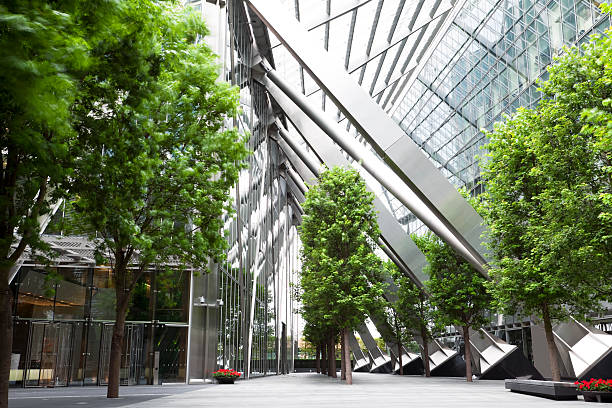
Directed attention — the effortful focus you use for spreadsheets, coding, proofreading — fatigues with sustained use. Recovery traditionally meant long breaks or immersion in nature. The Melbourne results suggest the dose can be much smaller when the visual input carries the right signals: fractal patterns, soft asymmetry, gentle colour variation, implied life.
Concrete and glass surfaces offer little of that vocabulary. They are not hostile, just neutral in a way that does not engage the restorative pathways. Green surfaces — even in a still photograph — speak a language the visual system has handled for millennia. Processing them lightly may pause the effort meter rather than adding to it.
This is micro-restoration: recovery interventions measured in seconds, not hours. It does not replace sleep, movement, or proper meal breaks. It fills the gap between tasks when you cannot leave the building but can look up, out, or at a well-chosen image for one minute.
Nature holds interest without demanding executive effort — the mind rests while still engaged.
Benefits appeared at forty seconds in the study — practical within almost any schedule.
Improved accuracy in the second task half suggests real cognitive recovery, not placebo mood.
Before starting a demanding block, identify what natural view you can access in forty seconds — trees, sky, a planter. Use it mid-block without your phone.
Keep three to five high-quality nature images offline. Full-screen one during micro-breaks if you have no window. Rotate to avoid habituation.
Step outside and look at living plants, not your screen. Count forty seconds literally if you tend to rush back too soon.
Write your return action first, then take the green view. Combining residue clearance with visual restoration stacks benefits.

A forty-second video session and a forty-second tree view take the same clock time but can feel very different when you return to work. Feeds often raise stimulation; brief nature views are usually calmer. Choosing a high-stimulation break may explain why some pauses leave you feeling more scattered — though individual responses vary.
Finnish cities integrate green corridors even in urban cores — parks within walking distance of offices. If you work in Vaasa or similar settings, a literal minute outside may be more accessible than you assume. Winter does not cancel the effect; evergreens, snow-lit branches, and open sky still carry natural patterning.
Build micro-restoration into meeting culture: suggest a one-minute visual pause before long afternoon sessions. Teams that laugh at the idea often report less eye-rubbing and fewer careless mistakes afterward. The cost is negligible; the mechanism is supported by peer-reviewed work, not wellness marketing.
Start with one daily anchor — after your hardest morning block, before lunch, or midway through report writing. Set a timer for forty to sixty seconds. Look at something green or naturally textured. No messages, no headlines. Treat it as equipment maintenance for your eyes and attention, like saving a file.
Track subjective focus on a one-to-five scale before and after for a week. Most people see a consistent bump on days they use the protocol versus days they scroll. That personal evidence reinforces the habit better than remembering a study abstract months later.
Scale up only after the micro habit sticks. Longer nature walks on weekends complement seconds-level resets during the week. Together they address different recovery timescales — immediate vigilance repair and broader stress cycling — without requiring a lifestyle overhaul.

When stepping outside for micro-breaks, mind weather, footing, and traffic — especially on icy Finnish sidewalks in winter.
Combine green viewing with looking at distant objects to relax ciliary muscles during screen-heavy days.
If pollen affects you, indoor plant views or nature photos may suit better than outdoor grass exposure in season.
| Date | Event | Location |
|---|---|---|
| 20 Aug 2026 | Green Spaces & Attention Lab | University of Vaasa |
| 02 Aug 2026 | Dopamine-Aware Breaks Seminar | Online |
Real natural scenes in studies outperformed plain concrete. High-quality images of real nature showed benefits; plastic plants may help mood but evidence is thinner for attention recovery.
Forty seconds was the tested dose. Slightly longer views — up to a few minutes — are reasonable. Diminishing returns appear if the break becomes another stimulating activity.
Use curated nature photography, a desk plant, or sky watching. The goal is natural visual patterning, not a specific rooftop.